How to Set Custom Fonts using .ttf file to your iOS app

Set Custom Fonts


Objective

Main objective of this post is to give you an idea about How to set custom fonts using ttf file in iOS App
Introduction
You can set custom fonts using .ttf file to your iOS Application and then apply those fonts to text controls in your application. The .ttf (True Type Font) file is a font file developed by Apple. Apple and Microsoft use these .ttf files as raster font format. Raster font is a font that can be scaled to any size without losing its quality.
The below information will full fill your requirements to use various .ttf files set custom fonts to your iOS application.
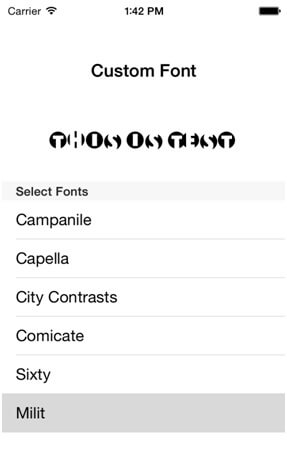
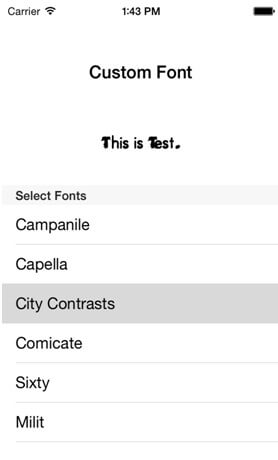
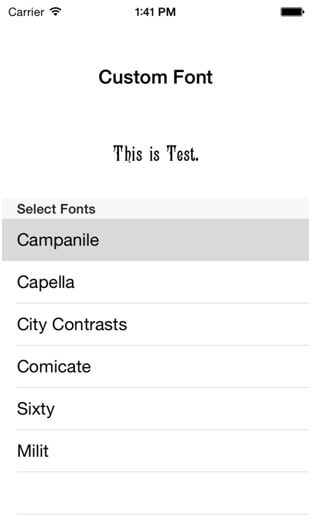
You will get Final Output:
  • output-1
  •  
  • output-2
  •  
  • output-3

Step 1 Download Custom Fonts

Download various custom fonts .ttf files from web in our demo I have downloaded it from http://www.dafont.com/ttf.d592. Once downloaded drag each font .ttf file inside of the src folder into your project.

Step 2 Custom Fonts

Various files that have used in this demo project describe from following pictures. 
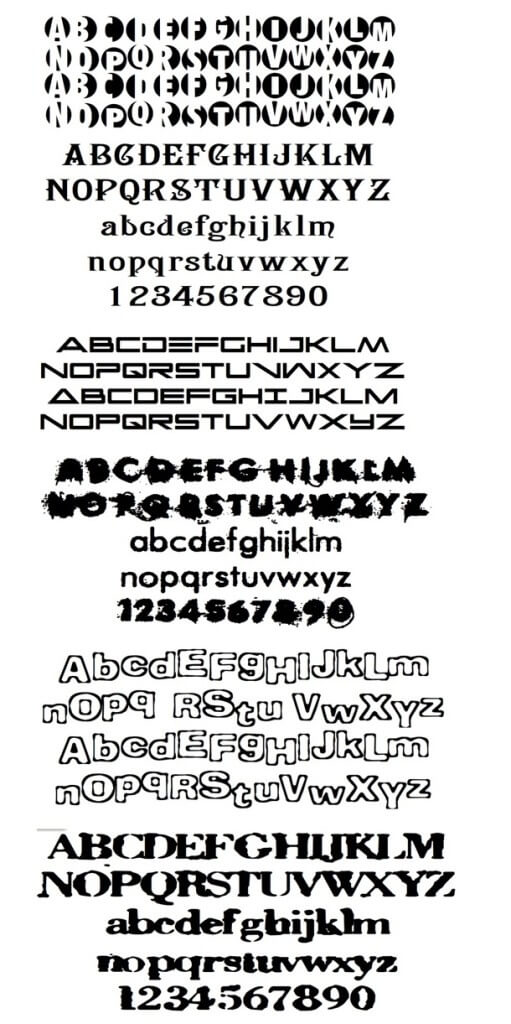
custom-font-511x1024

Step 3 Set fonts in Info.plist

Now open .plist file of your project, then add new information property named Fonts provided by application and add following items as name of .ttf file.
You can have brief idea from following figure:
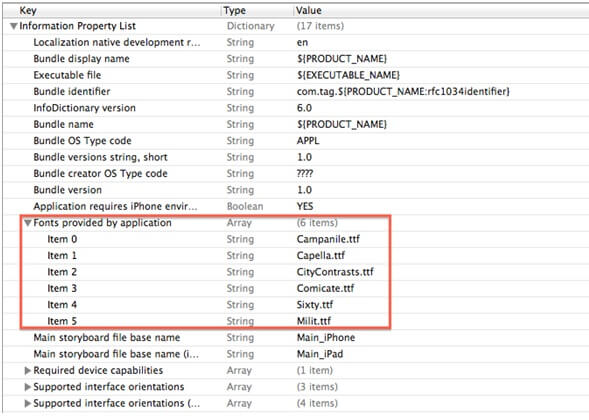

plist file

Step 4 Design UI

Prepare your user interface which describe in following figure. 
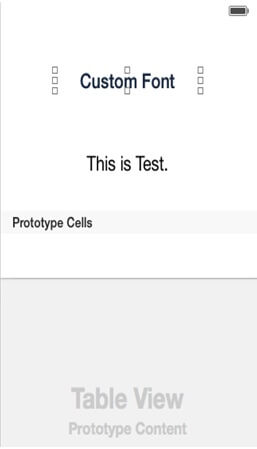
custom font

Step 5 Initialised font

Set Data source and delegate of UITableviewController. Write following line of code into viewDidLoad()method of ViewController.m file.

- (void)viewDidLoad
{
     [superviewDidLoad];
     font=[[NSMutableArray alloc] initWithObjects:@"Campanile",@"Capella",@"City Contrasts",@"Comicate",@"Sixty",@"Milit", nil];
}


Step 6 UITableView delegate & datasource methods

Apply following delegate methods into your main ViewController.m file as follows:
-(NSInteger)numberOfSectionsInTableView:(UITableView *)tableView
{
       return 1;


- (NSInteger)tableView:(UITableView *) tableView numberOfRowsInSection:(NSInteger)section
{
      return [font count];

- (UITableViewCell *)tableView:(UITableView *)tableViewcellForRowAtIndexPath:(NSIndexPath *)indexPath
{
     staticNSString *CellIdentifier = @"Cell";
     [tableView registerClass:[UITableViewCell class] forCellReuseIdentifier:CellIdentifier];
     UITableViewCell *cell = [tableView dequeueReusableCellWithIdentifier:CellIdentifier forIndexPath:indexPath];
     [cell setBackgroundColor:[UIColor clearColor]];
     NSString *fontName = [font objectAtIndex:[indexPath row]];
     [cell.textLabel setText:fontName];

return cell;

- (NSString *)tableView:(UITableView *)tableViewtitleForHeaderInSection:(NSInteger)section
{
     return @"Select Fonts";

- (void)tableView:(UITableView *)tableViewdidSelectRowAtIndexPath:(NSIndexPath *)indexPath
{
     [lblDemo setFont:[UIFont fontWithName:[font objectAtIndex:indexPath.row] size:20]];
}
If you have got any query related to iOS Set Custom Fonts using in comment them below.

Comments

Popular Posts

React Native - Text Input

In this chapter, we will show you how to work with  TextInput  elements in React Native. The Home component will import and render inputs. App.js import React from 'react' ; import Inputs from './inputs.js' const App = () => { return ( < Inputs /> ) } export default App Inputs We will define the initial state. After defining the initial state, we will create the  handleEmail  and the  handlePassword  functions. These functions are used for updating state. The  login()  function will just alert the current value of the state. We will also add some other properties to text inputs to disable auto capitalisation, remove the bottom border on Android devices and set a placeholder. inputs.js import React , { Component } from 'react' import { View , Text , TouchableOpacity , TextInput , StyleSheet } from 'react-native' class Inputs extends Component { state = { ...

An introduction to Size Classes for Xcode 8

Introduction to Size Classes for Xcode In iOS 8, Apple introduced  size classes , a way to describe any device in any orientation. Size classes rely heavily on auto layout. Until iOS 8, you could escape auto layout. IN iOS8, Apple changed several UIKit classes to depend on size classes. Modal views, popovers, split views, and image assets directly use size classes to determine how to display an image. Identical code to present a popover on an iPad  causes a iPhone to present a modal view. Different Size Classes There are two sizes for size classes:  compact , and  regular . Sometime you’ll hear about any.  Any  is the generic size that works with anything. The default Xcode layout, is  width:any height:any . This layout is for all cases. The Horizontal and vertical dimensions are called  traits , and can be accessed in code from an instance of  UITraitCollection . The  compact  size descr...

What are the Alternatives of device UDID in iOS? - iOS7 / iOS 6 / iOS 5 – Get Device Unique Identifier UDID

Get Device Unique Identifier UDID Following code will help you to get the unique-device-identifier known as UDID. No matter what iOS user is using, you can get the UDID of the current iOS device by following code. - ( NSString *)UDID { NSString *uuidString = nil ; // get os version NSUInteger currentOSVersion = [[[[[UIDevice currentDevice ] systemVersion ] componentsSeparatedByString: @" . " ] objectAtIndex: 0 ] integerValue ]; if (currentOSVersion <= 5 ) { if ([[ NSUserDefaults standardUserDefaults ] valueForKey: @" udid " ]) { uuidString = [[ NSUserDefaults standardDefaults ] valueForKey: @" udid " ]; } else { CFUUIDRef uuidRef = CFUUIDCreate ( kCFAllocatorDefault ); uuidString = ( NSString *) CFBridgingRelease ( CFUUIDCreateString ( NULL ,uuidRef)); CFRelease (uuidRef); [[ NSUserDefaults standardUserDefaults ] setObject: uuidString ForKey: @" udid " ]; [[ NSUserDefaults standardUserDefaults ] synchro...